
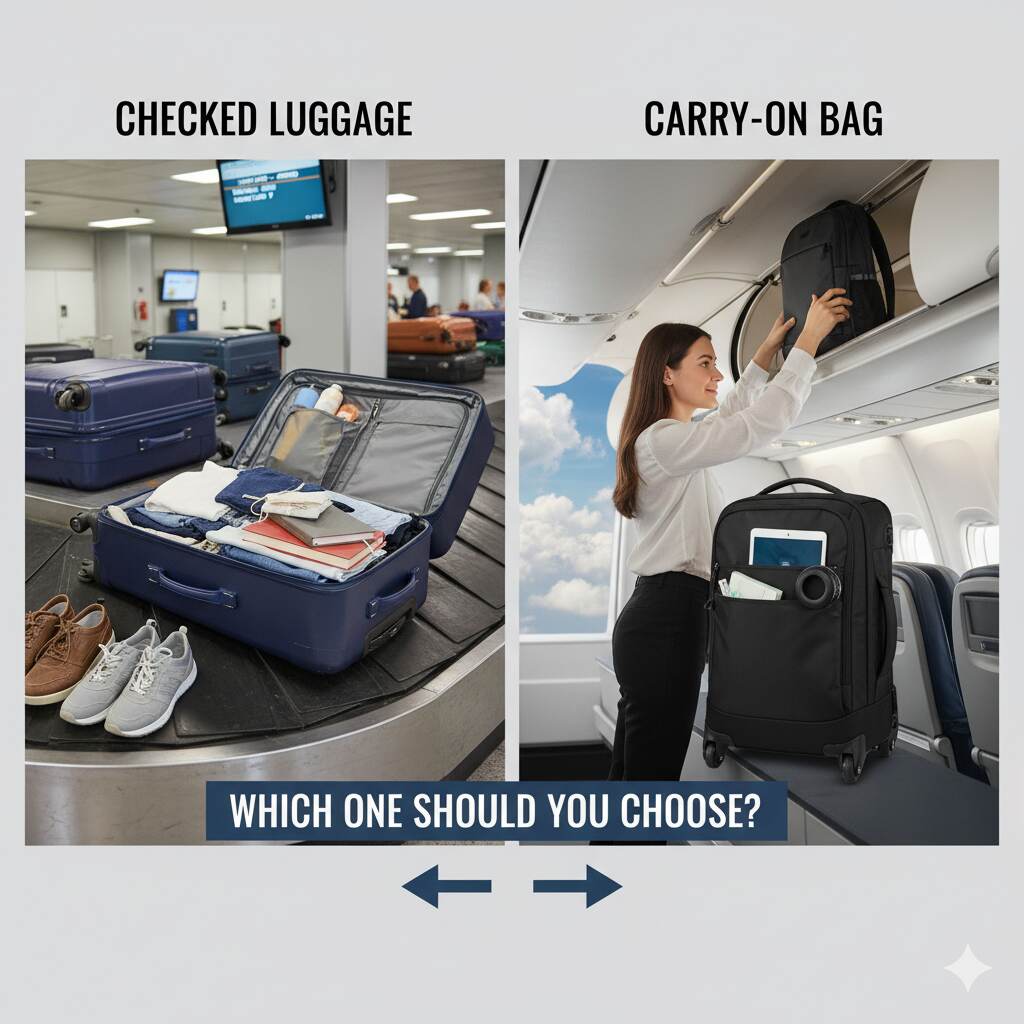
Travelling is a personal experience and how you pack can shape your entire journey. Whether you’re jetting off for a weekend getaway or embarking on a month-long adventure, the decision between checked luggage vs carry-on is one of the first—and most important—choices you’ll make. Each option has its own set of advantages, drawbacks and ideal use cases.
In this guide, we’ll explore the pros and cons of both, help you decide which suits your travel style and offer tips to make packing a breeze.
Understanding the Basics
Before diving into comparisons, let’s define what each term means:
- Carry-on luggage refers to bags small enough to fit in the overhead bin or under the seat. Most airlines limit this to around 22 x 14 x 9 inches and 7–10 kg in weight.
- Checked luggage is stored in the cargo hold of the plane. It’s typically larger, with weight limits ranging from 20 to 32 kg depending on the airline.
Pros of Carry-On Luggage
1. Speed and Convenience
- Skip the check-in counter and head straight to security.
- No waiting at baggage claim after landing.
- Ideal for short trips or tight layovers.
2. Cost Savings
- Many airlines charge for checked bags, especially budget carriers.
- Travelling light can save you $30–$100 per flight.
3. Security and Control
- Your bag stays with you, reducing the risk of loss or damage.
- You can access essentials during the flight.
4. Packing Discipline
- Forces you to pack only what you need.
- This approach encourages minimalist travel and more intelligent choices.
Cons of Carry-On Luggage
1. Limited Space
- Not suitable for long trips or bulky items.
- You may need to compromise on clothing, gear, or souvenirs.
2. Strict Airline Rules
- Size and weight restrictions vary by airline.
- Overstuffed bags may be forced to check at the gate.
3. Security Hassles
- Liquids must be under 100ml and fit in a clear plastic bag.
- Electronics and other items must be removed during screening.
Pros of Checked Luggage
1. More Room
- Pack everything you need, including formal wear, sports gear, or gifts.
- Ideal for extended vacations, family trips or winter travel.
2. Less Stress at Security
- No need to worry about liquid limits or removing items.
- You can breeze through checkpoints with just a personal item.
3. Freedom to Shop
- Bring back souvenirs, wine bottles or local delicacies without worrying about space.
Cons of Checked Luggage
1. Extra Fees
- Checked bags often come with a price tag.
- Overweight or oversized luggage can incur hefty penalties.
2. Risk of Loss or Damage
- Bags can be delayed, lost or mishandled.
- Fragile items may not survive rough handling.
3. Longer Wait Times
- You’ll need to arrive earlier to check your bag.
- Post-flight baggage claim can add 30–60 minutes to your journey.
When to Choose Carry-On
- Weekend trips or short business travel.
- Budget flights with strict baggage fees.
- Destinations with limited transport or walkable access.
- If you’re travelling solo and want to stay mobile.
When to Choose Checked Luggage
- Extended vacations or multi-climate travel.
- Trips requiring special gear (skiing, diving, photography).
- Travelling with kids or multiple people.
- If you plan to shop or bring back gifts.
Tips for Smart Packing
For Carry-On:
- Use packing cubes to maximise space.
- Wear bulky items like jackets and boots on the plane.
- Choose multi-purpose clothing.
- Roll clothes instead of folding.
For Checked Luggage:
- Label your bag clearly with contact info.
- Use TSA-approved locks.
- Pack essentials in a separate carry-on in case of delays.
- Wrap fragile items in clothing or bubble wrap.
Frequently Asked Questions (FAQ)
Q1: Can I bring a carry-on and a personal item?
A: Yes, most airlines allow one carry-on and one personal item, like a backpack or purse.
Q2: What happens if my carry-on is too big?
A: It may be gate-checked and you could be charged a fee depending on the airline.
Q3: Is checked luggage safer for fragile items?
A: Not always. Fragile items are better in carry-on unless well-padded and protected.
Q4: How early should I arrive if I’m checking a bag?
A: At least 2 hours before domestic flights and 3 hours for international flights.
Q5: Can I track my checked luggage?
A: Some airlines offer tracking via apps or baggage tags but it’s not universal.
Final Thoughts
Choosing between checked luggage and carry-on depends on your destination, travel style and priorities. If speed, savings and simplicity matter most, go carry-on. If comfort, flexibility and space are key, checked luggage might be your best bet.
Ultimately, the savviest travellers know when to use each—and how to pack like a pro. So next time you plan a trip, think beyond the destination. Think about how you’ll get there, what you’ll bring and how your luggage can enhance—not hinder—your adventure.
Travel light when you can. Pack smart when you must. And always choose what works best for you.