
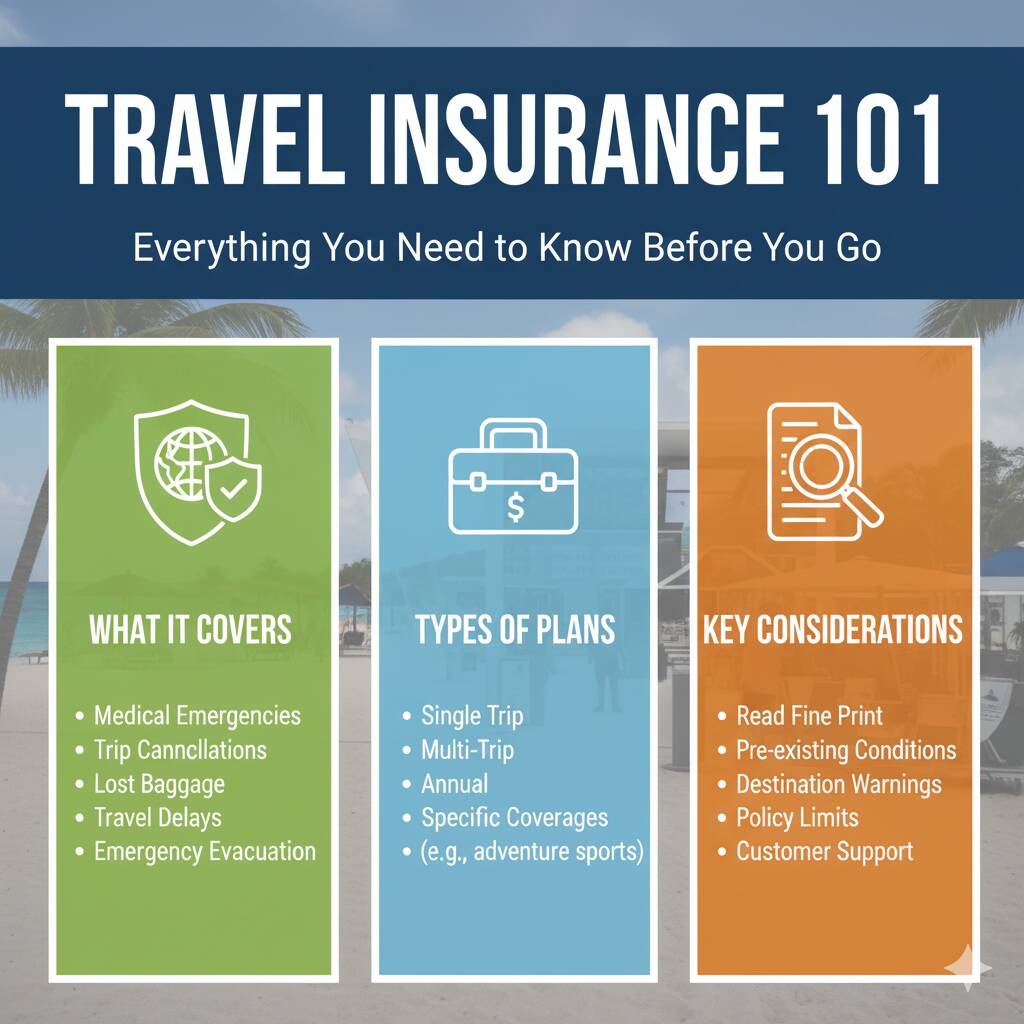
Travel Insurance 101 might not be the most exciting part of planning a trip but it’s one of the most important. Whether you’re heading out on a weekend getaway or a year-long adventure, having the right coverage can save you from unexpected headaches—and expenses. In this comprehensive guide, we’ll break down the basics of Travel Insurance 101, what it covers, how to choose a plan and why it’s a wise investment for every traveller.
What Is Travel Insurance?
At its core, travel insurance is a safety net. It protects you financially if things go wrong before or during your trip. From cancelled flights to medical emergencies, lost luggage to natural disasters, a good policy can help you recover costs and get back on track.
Why Do You Need Travel Insurance?
Many travellers assume they don’t need insurance—until they do. Here are some common scenarios where travel insurance can be a lifesaver:
- If you get sick or injured abroad, you need medical care.
- Your flight is cancelled due to weather or airline issues.
- A family emergency forces you to cancel your trip.
- Your luggage is lost or delayed.
- Political unrest or natural disasters disrupt your plans.
Without insurance, you could be left footing the bill for thousands of dollars in unexpected costs.
Types of Travel Insurance Coverage
Not all policies are created equal. Here are the main types of coverage to consider:
1. Trip Cancellation and Interruption
This covers non-refundable expenses if you have to cancel or cut your trip short due to illness, injury or other covered reasons.
2. Medical and Emergency Evacuation
Covers medical treatment abroad and emergency transport to the nearest hospital—or back home if needed.
3. Baggage Loss and Delay
Reimburses you for lost, stolen or delayed luggage and personal items.
4. Travel Delay
Covers meals, accommodations, and other expenses if your trip is delayed for a covered reason.
5. Accidental Death and Dismemberment
Provides a payout to your beneficiaries in the event of a serious accident.
6. Rental Car Coverage
Covers damage or theft of a rental vehicle, often cheaper than buying coverage from the rental agency.
What’s Not Covered?
Every policy has exclusions. Common ones include:
- Pre-existing medical conditions (unless covered by a waiver).
- High-risk activities like skydiving or scuba diving.
- Travelling against Government advisories.
- Cosmetic or elective procedures.
- Losses due to intoxication or illegal activity.
Always read the fine print to understand what is and isn’t covered.
How Much Does Travel Insurance Cost?
The cost of travel insurance typically ranges from 4% to 10% of your total trip cost. Factors that affect the price include:
- Age of the traveller.
- Length and cost of the trip.
- Type of coverage selected.
- Destination and risk level.
For example, a $3,000 trip might cost $120–$300 to insure, depending on the plan.
How to Choose the Right Travel Insurance Plan
Here’s a step-by-step guide to finding the best policy for your needs:
1. Assess Your Risks
Are you travelling internationally? Do you have health concerns? Are you visiting a remote area? Your answers will guide your coverage needs.
2. Compare Plans
Use comparison websites to evaluate multiple providers. Look at coverage limits, exclusions and customer reviews.
3. Check Your Existing Coverage
Some credit cards and health insurance plans offer limited travel protection. Know what you already have before buying more.
4. Read the Policy Carefully
Understand the terms, conditions and claim process. Don’t assume something is covered—verify it.
5. Buy Early
Purchase your policy soon after booking to maximise benefits like trip cancellation coverage.
When Should You Buy Travel Insurance?
The best time to buy travel insurance is right after you book your trip. This ensures you’re covered for cancellations and gives you access to time-sensitive benefits like pre-existing condition waivers.
How to File a Claim
If something goes wrong, follow these steps:
- Contact your provider as soon as possible.
- Gather documentation: receipts, medical records, police reports etc.
- Submit your claim online or by mail.
- Follow up if needed and keep copies of all correspondence.
Most claims are processed within a few weeks but timelines can vary.
Frequently Asked Questions (FAQ)
Q1: Is travel insurance mandatory?
A: It’s not mandatory for most destinations but some countries require proof of coverage for entry.
Q2: Does travel insurance cover COVID-19?
A: Many providers now include COVID-related coverage but it varies. Always check the policy details.
Q3: Can I buy travel insurance after booking my trip?
A: Yes, but buying early gives you more comprehensive coverage.
Q4: What if I have a pre-existing condition?
A: Some plans offer waivers if you buy within a specific time frame after booking.
Q5: Is travel insurance worth it for domestic trips?
A: It can be, especially if your trip is expensive or non-refundable.
Final Thoughts
Travel Insurance 101 may seem like an extra expense but it’s really an investment in peace of mind. From medical emergencies to trip disruptions, it protects you from the unexpected and helps you travel with confidence. Whether you’re a frequent flyer or a first-time traveller, understanding the basics of travel insurance ensures you’re prepared for whatever the journey brings.
So before you zip up your suitcase and head to the airport, take a moment to protect your plans. Because when it comes to travel, it’s always better to be safe than sorry.